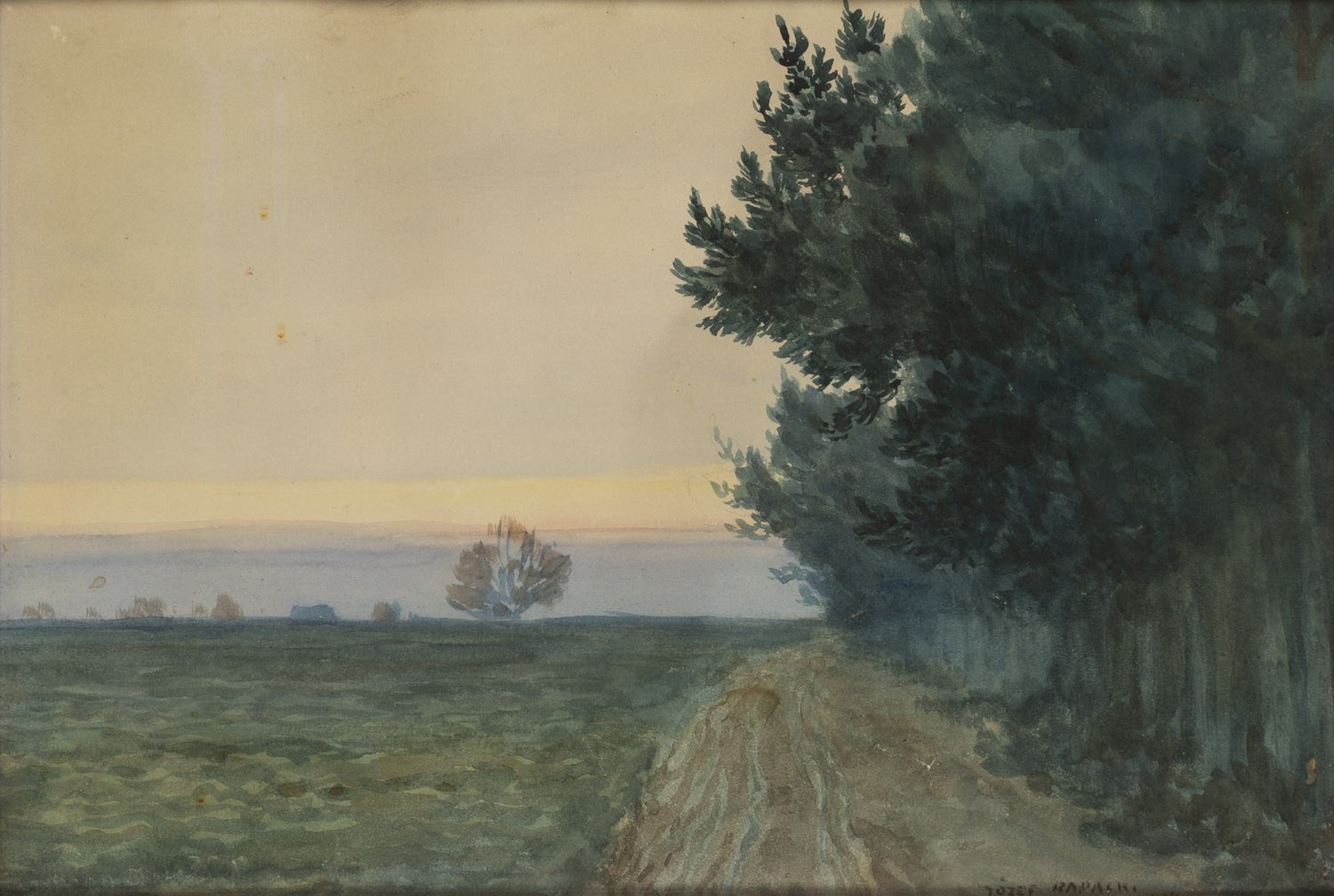
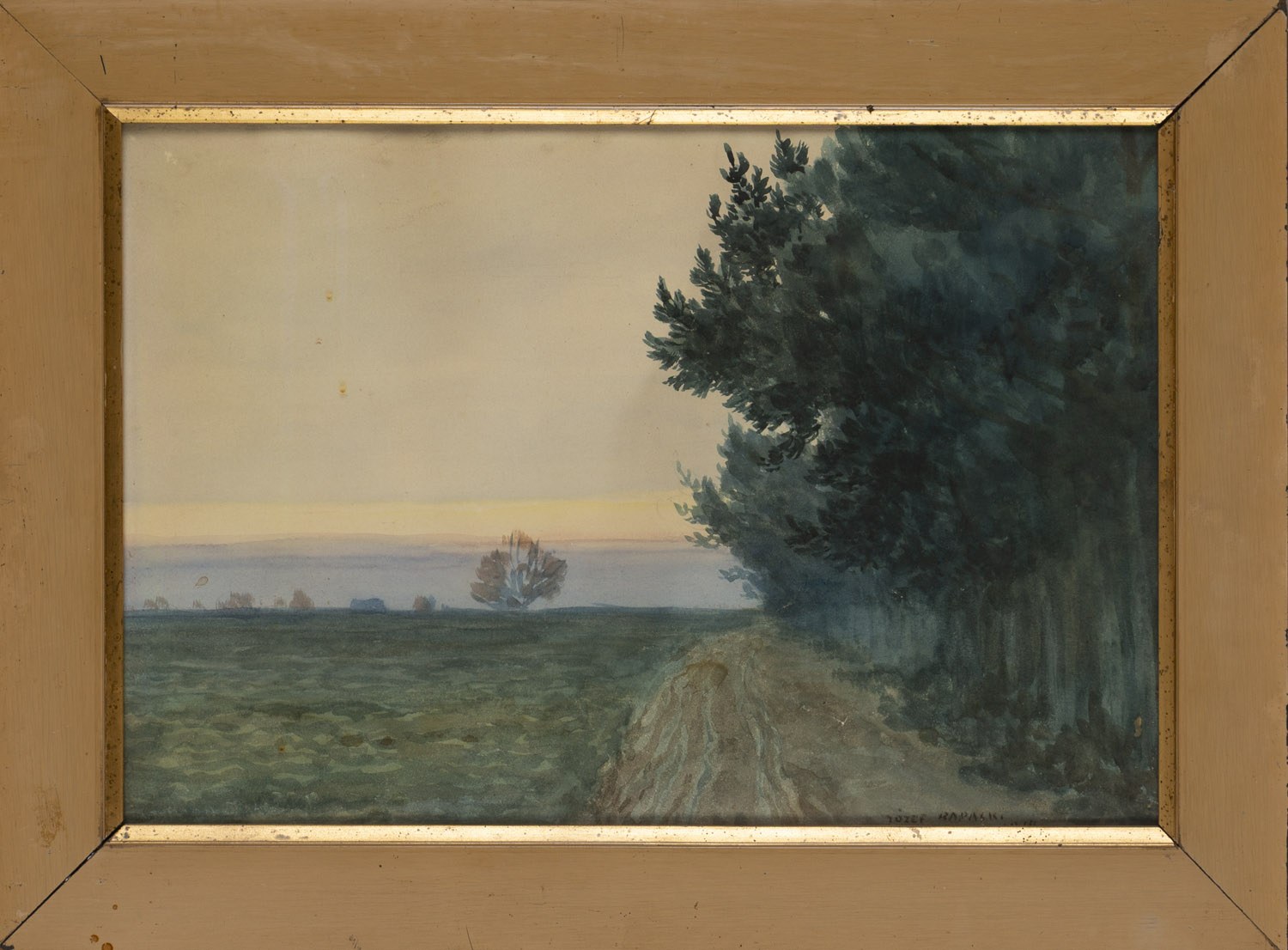
Dimensions: 30 x 45 cm
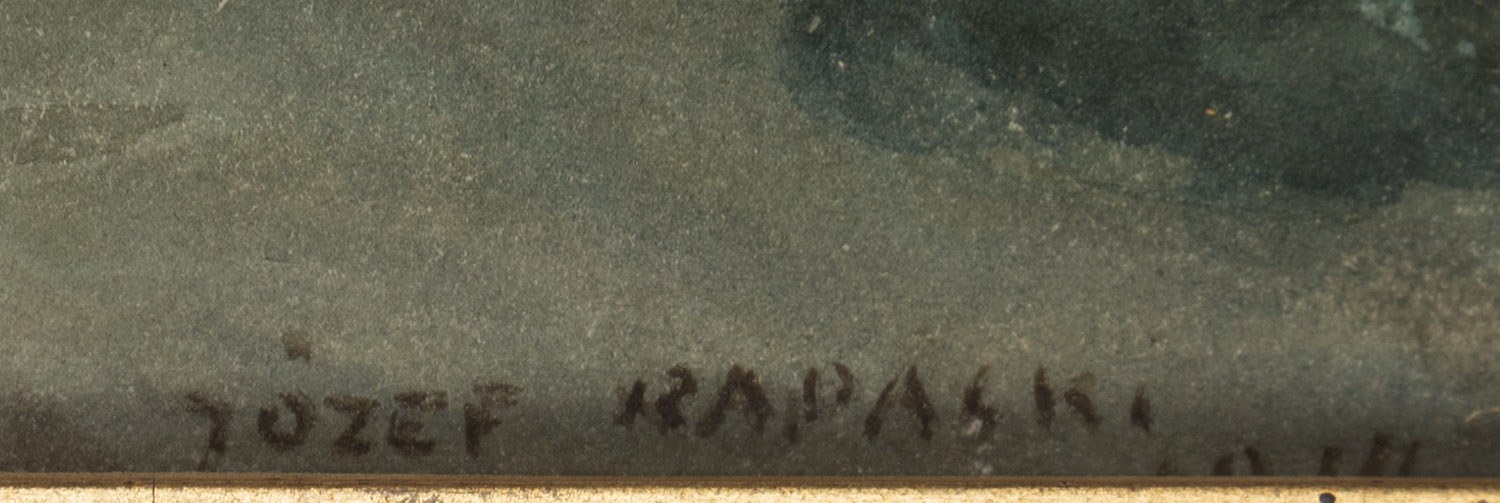
signed and dated lower right: 'JÓZEF RAPACKI | 1914.'
Biography
He was born in Warsaw into a family with artistic traditions. His mother, Józefina (née Hoffman), was a singer, and his father, Wincenty, was an actor, writer, and translator. Rapacki’s artistic talents became apparent as early as childhood. He began his artistic education in 1885 in Wojciech Gerson’s Drawing Class in Warsaw.It was there that the artist’s passion for landscape painting, plein air excursions, and the study of nature was born—a passion he continued to develop throughout the following years of his career. Two years later, Rapacki began his studies at the School of Fine Arts in Kraków. In 1888, he returned to Warsaw and continued his studies under Gerson’s guidance. His years of study in Kraków and Warsaw were a period during which the artist was strongly influenced by Stanisław Witkiewicz’s innovative ideas of naturalism. A turning point in the painter’s life was his trip to Munich in 1889. Within the circle of the Munich Academy of Fine Arts, he honed his artistic skills. He also solidified his artistic convictions regarding landscape painting, which was revered within the Munich school’s artistic community. After completing his studies, he undertook numerous trips, including one to Italy.
After settling in Warsaw, he continued the collaboration with numerous magazines that he had begun in his youth. As an illustrator, he created works for *Tygodnik Ilustrowany*, *Wędrowiec*, and *Świat*. He also illustrated and designed books. He was active in the field of graphic art. He was a member of the Pro Arte group. In 1900, he moved to Kraków for health reasons. He stayed in Lesser Poland periodically until 1907. During that time, he visited Zakopane and Szczawnica, where he painted. In 1907, he moved with his wife to Olszanka in Mazovia, where he built his home and studio. He led a very active social life there. He moved in the circles of the artistic bohemian community, which owned estates in the area, including in Wola Pękoszewska and Radziejowice. His body of work consists primarily of landscapes, both intimate and large-scale. Rapacki is regarded as a master of the Mazovian landscape. In his compositions, he combined many trends and ideas developing in European painting at the turn of the 19th and 20th centuries—realism, plein air painting, and impressionism. He influenced a wide range of Polish landscape painters who drew inspiration from his work.